Diabetes Developments - A blog on latest developments in diabetes by David Mendosa
Advertisment

Holiday Eating that Respects Diabetes

January 31st, 2013 · No Comments

The huge amounts of food on our tables during these holidays and the stress that often goes with these big family meals don’t have to destroy our diabetes management. Even when we eat too much, we have a way to make up for it and at the same time relieve the stress of these gatherings.

Not overeating in the first place would, of course, be better. But just like nobody has a perfect body, none of us has perfect discipline. And we have no better time than the holidays for making exceptions.

Don’t ever tell me that you cheat on your diet. If you ever cheat, it’s when you take something from someone else or from all of us that you don’t have a right to have. On the other hand, when we make an exception to what we know is good management of our diabetes, we do it for our immediate gratification at the expense of our long-term benefit. W all do this sometimes: we would have to be a saint or enlightened to manage our impulses perfectly all the time.

Any overeating exceptions that we make, particularly when we eat more carbohydrate-rich foods than usual, will raise our blood sugar levels. At that point we might react by kicking ourselves. That might help a bit, because each kick will stir up our metabolism. But a less painful way would be to use one of the sure-fire ways that we know will immediately bring our blood sugar levels back down.

People with diabetes can use one and only one diabetes medication to immediately counteract the effects of too much food: insulin. If you use insulin, you know that you can “cover” the excess food you eat with a shot of fast-acting insulin. I’m no fan of using insulin in that way, because more insulin makes us more hungry and can lead to a vicious cycle of overeating. So it’s harder on our bodies than not going high in the first place, but in an emergency it does work.

Much better is just a few minutes of brisk walking around the block. At a holiday meal this is an exceptionally good idea because the walk will give us a break from the noise and stress of a large gathering. Just be sure to have a small flashlight at hand, because the neighborhood might be dark.

The best time to go for a walk is right after dinner, so our blood sugar won’t have the opportunity to stay high for a long time. Actually, when the other people at the table are stuffing themselves with desserts, you could take a quiet, stress-busting walk.

Our chances of getting a dessert that won’t make our blood sugar go sky-high are slim. Pumpkin pie, pecan pie, or any sort of cake are sure to wreak havoc with our numbers. The only dessert that I would ask for is either a cheese platter or a bowl of fruit, especially blueberries and cream. Of course we can bring one of these deserts to the occasion and then right afterwards go for our walk.

Respecting your diabetes in this way can actually be an inspiration for others at the table. In a large family you are quite likely not to be the only one who has diabetes. Our genes have a lot to do with our getting diabetes in the first place and you share some of these genes with other members of your family. In addition, some of your relatives at the holiday table are almost sure to have pre-diabetes. You can be a role model.

This is a mirror of one of my articles that Health Central published. You can navigate to that site to find my most recent articles.

Share

Print This Post Print This Post


→ No CommentsPosted in: Food

People with Diabetes Like These Meters

January 31st, 2013 · No Comments

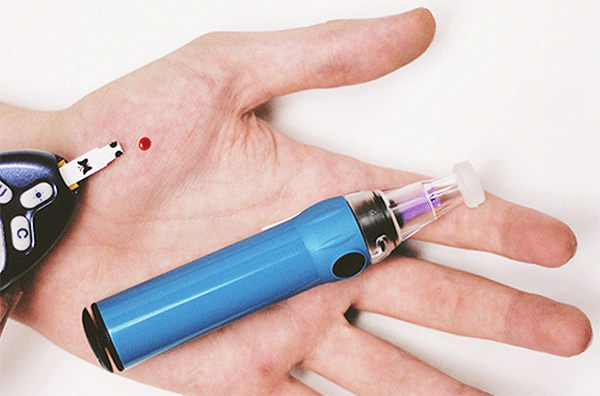
Most of us who have diabetes are happy with the blood glucose meters that we use. This is the main conclusion of the first Blood Glucose Meter Satisfaction Study. This study by the marketing firm J.D. Power and Associates came out today, and I interview Scott Hawkins, its director of healthcare, for further insights.

They based the study on responses they got last month from 2,681 meter users. Scott told me that they used online panels of respondents who have opted in to take surveys and that they used their email responses.

The study included all the meters from the four top meter manufacturers, Roche Diagnostics, Abbott Diabetes Care, Bayer Diabetes Care, and LifeScan. Why just those four companies? “Because they make up 80 of the market,” Scott replied. In fact, almost all health insurance plans limit our choices to meters from these four companies.

[Read more →]

Share

Print This Post Print This Post


→ No CommentsPosted in: Testing

John Dodson’s Diabetes Journey

January 10th, 2013 · 8 Comments

At first John Dodson wasn’t a good diabetes patient, he says. For the first 10 years after he learned that he had type 2 diabetes in 1985, he thought that managing his diabetes was up to his doctor.

“I tried to do what he said, but of course I failed,” he told me. “My blood sugar was generally between 150 and 250, so I had an awfully hard time.”

The doctor that he saw at that time was a general practitioner. That doctor prescribed the only oral drug we had at that time for diabetes, one of the a sulfonylureas called glyburide. Later he switched to an endocrinologist, who gave John an unpleasant wake-up call.

“That doctor told me that there was nothing he could do for me and that after five years I would be on dialysis,” John recalls. “I walked out of that office thinking that this is not going to be my future.”

So he switched right away to another endocrinologist, Dr. Joe Prendergast. He is one of this country’s leading endocrinologists and a pioneer in many areas. I have known him since 1999 when I wrote about his telemedicine practice in an article that I wrote for the American Diabetes Association’s website.

“The very day that I saw Dr. Joe,” John remembers, “he said, John, I think I’ve got something that will help you.” That was in June 2005. A diabetes medication in a new class of drugs called GLP-1 agonists, Byetta (exenatide), had just become available. John became the first person in the county to take Byetta.


John Dodson near Moss Landing, California,  in February 2008

Byetta was what connected John and me. We started corresponding in early 2006 when he wrote me about my about my post here, “Stalking Byetta.” His encouragement for me to start taking Byetta even if I couldn’t work out my insurance coverage did a lot to get me started a few days later. Since that time John became my role model and ultimately my best friend, and we have visited each other often.

[Read more →]

Share

Print This Post Print This Post


→ 8 CommentsPosted in: Medication, People

Cholesterol Myths

December 25th, 2012 · 2 Comments

The cholesterol issue is at the heart of every dietary recommendation for the past 30 years, says Dr. Jonny Bowden. “When you think about it — and I have thought about it — it has influenced everything we have been taught about what to eat and what not to eat.”

Together with Stephen Sinatra, M.D., a board certified cardiologist with more than 30 years of clinical practice, they wrote a new book, The Great Cholesterol Myth, which Fair Winds Press published on November 1. Alternatively, you can get a Kindle edition, which is what the publisher sent me for review.

Dr. Bowden has a Ph.D. in nutrition and is the author of 10 books with some of the soundest advice on what to eat that I have ever read. His book Living Low Carb is one of the very best books on the lifestyle that I follow and recommend. My only regret is that I failed to discover it when it came out, so I haven’t reviewed it. Dr. Bowden tells me, however, that a revised edition is in the works, and I will certainly review it as soon as I get my hands on it.

[Read more →]

Share

Print This Post Print This Post


→ 2 CommentsPosted in: Complications

How Often to Check A1C

December 23rd, 2012 · 2 Comments

All of us who have diabetes regularly get our A1C checked. Few of us check it often enough.

The A1C is the best way we have to show how well we are managing our disease. It’s a simple test that we can perform at home or at a doctor’s office or lab.

Just like the fingerstick tests that we use for spot checking our blood sugar levels before or after meals, the A1C test uses a small drop of blood. But the A1C measures our sugar level over a lot longer time.

How much longer is the question. The answer to that question can tell us how often that we need to check our A1C level.

The A1C test measures the percentage of glycated hemoglobin, also known as HbA1C, in our blood. We need to check our A1C level “twice a year at a minimum or more frequently when necessary,” is the advice that the American Diabetes Association offers in its “A1C” article. That’s because “the A1C test measures your average blood glucose control for the past 2 or 3 months.”

[Read more →]

Share

Print This Post Print This Post


→ 2 CommentsPosted in: Testing

Why Diabetes Advocacy Has a Problem

December 19th, 2012 · 1 Comment

If we were in the same room, I’d be willing to bet that you didn’t know that November is National Diabetes Month. Why should you?

This event comes around every year at this time. I know about it only because public relations people write or call me to publicize something or other in connection with it.

Trying to get people to think about diabetes for one month of the year is not my idea of effective advocacy. I think about diabetes a lot more often than that, and I guess that you do too. Even if we thought about diabetes all year long, that would be awareness, not advocacy.

Some organizations that include the word “diabetes” in their names sponsor events that also include the word “cure.” They talk a lot about curing this incurable disease, and they have good reason to talk the talk, while failing to walk the walk.

Here in Colorado you can pay a little extra and get a license plate that says, “JDRF: Improving Lives — Curing Type 1 Diabetes.” If you live in Indiana, your car’s license plate can read, “Stop Diabetes.” Other states offer other license plates to bring more attention to diabetes and the organizations that talk about it.

Talking about curing diabetes raises money and awareness for these organizations to continue. This is fundraising, not advocacy. In fact, none of us who have diabetes are doing any advocacy well.

[Read more →]

Share

Print This Post Print This Post


→ 1 CommentPosted in: Psychosocial

A New Treatment for Neuropathy Pain

December 13th, 2012 · No Comments

If we’re lucky, we will get diabetic neuropathy in our lifetimes. Nearly 60 percent of people with diabetes in America have it after a quarter of a century.

Neuropathy may be the most common complication of diabetes and can make walking difficult as well as leading to even more serious problems like losing a limb. Diabetic neuropathy is damage caused to the nerves, and it can result in numbness, tingling, burning, and pain. Until now the painkillers that we could use don’t work well for everyone.

Now, however, a study from the University of Calgary shows evidence supporting a new drug therapy to treat diabetic neuropathy. The drug is called nabilone.

“My pain was so severe that I could barely walk a block,” says Leslie Bonenfant, who has type 2 diabetes and participated in the study. “After taking nabilone, I can manage my pain and I can function day to day,” she says.

Leslie Bonenfant (left) during a medical exam with Dr. Cory Toth

[Read more →]

Share

Print This Post Print This Post


→ No CommentsPosted in: Complications

Suppose Your Husband Has Diabetes

December 11th, 2012 · 2 Comments

When someone has diabetes, the whole family can help. If your child has diabetes, you have to take at least some responsibility for managing his or her diabetes.

But if your husband has diabetes, you can’t treat him like a child. He has to take responsibility himself before you can do anything to help.

Please notice that I write “husband,” not spouse. In the past 17 years that I have been writing about diabetes hundreds of wives have asked me how they can get their husband to manage his diabetes. I don’t remember any husband who was equally concerned with helping a wife, but I may have forgotten some of them.

[Read more →]

Share

Print This Post Print This Post


→ 2 CommentsPosted in: Psychosocial

Big Gulps are Out, Starch is In

November 27th, 2012 · 2 Comments

In the Big Apple the Big Gulp is out, and I think that’s a bad idea. However, my good friend “My Bariatric Life,” who writes about obesity for HealthCentral.com, says that for her “Big Gulps are Out, and That’s Ok by Me.”

I hope that you will read both my take and hers on this big issue. We remain friends, while the national war on sweeteners has begun.

Throughout America starch is still in. We eat a colossal amount of corn. Potatoes are plentiful. And bagels are bigger than ever.

“Seeking to reduce runaway obesity rates, “the New York City Board of Health last month approved Mayor Michael Bloomberg’s ban on the sale of sugary drinks larger than 16 ounces at restaurants and concession stands.


Down with Big Gulps!

But is sipping sugar and high-fructose corn syrup why we Americans have so much trouble with our weight? Is this why more than two-thirds of adult Americans are overweight andmore than one-third are obese? Does this explain why 8.3 percent of Americans have diabetes?

[Read more →]

Share

Print This Post Print This Post


→ 2 CommentsPosted in: Food

Prepare to See the Doctor

November 22nd, 2012 · 2 Comments

When we make an appointment to see our doctor, it’s because we recognize that we need help with our health. But when we enter his or her office we need to be sure not to abdicate our responsibility.

We have the primary responsibility for our health. Diabetes is a disease that, perhaps more than any other, depends much more on those of us who have it than on the doctor.

Actually, how could it be otherwise for anyone? Few people will get more than 15 minutes of the doctor’s time every three months.

We decide what we eat, how much physical activity we get, and whether we will take our prescribed medicine. While that’s obvious, too often we trade this active role in managing our health for a passive role at the doctor’s office.

Have you noticed that people who are successful in managing meetings almost always prepare a written agenda? We need to do exactly that for each office visit.

An agenda works best when we write it out in our priority order. We need to cover a limited number of points that we can work on together in a quarter of an hour. The agenda should be bullet points, not paragraphs. It works best when we give a copy to our doctor.

When we prepare an agenda, it forces us to think out what we want to get out of our appointment. At the same time it leads our doctor to focus on what’s troubling us the most.

[Read more →]

Share

Print This Post Print This Post


→ 2 CommentsPosted in: Basics